One of the biggest mistakes I see business owners make is assuming growth always requires building a bigger audience of their own.
- More followers.
- A bigger email list.
- More website visitors.
- More subscribers.
- More connections.
Of course, growing your own audience has value. I'm a digital marketer and SEO strategist. I spend a lot of time helping businesses increase visibility and bring the right traffic to their websites.
But there is another part of marketing that businesses often overlook:
You don't have to build every audience you want to reach.
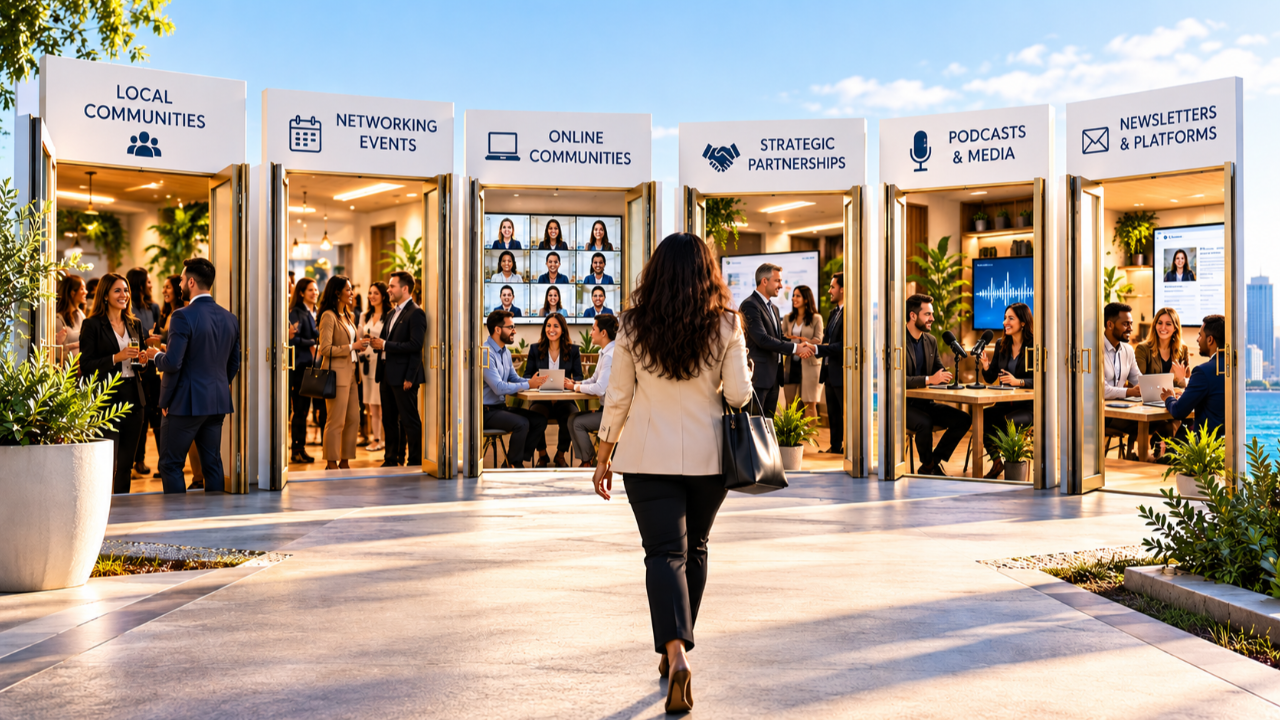
- Sometimes the people you want to meet are already gathered somewhere else.
- Someone else has already built the community.
- Someone else has already earned their attention.
- Someone else has already created the room.
Your job is to figure out which rooms make sense for your business and how you can become part of them.
Go Where the People Already Are
Imagine a business owner has 800 Instagram followers and wants to reach 2,000. She could spend months creating content, posting Reels, trying different hashtags, commenting, following people and hoping the algorithm gives her more exposure.
Meanwhile, there may be a local organization with 1,000 members who are business owners.
- There may be a podcast listened to by exactly the people she wants as customers.
- There may be an email newsletter reaching 10,000 people in her industry.
- There may be a professional association filled with potential referral partners.
- There may be a business community where her ideal customers are already having conversations every day.
That's an audience too. And you don't have to own it to benefit from being in front of it. I call these borrowed audiences.
What Is a Borrowed Audience?
A borrowed audience is an audience that someone else has already built that you can reach through participation, collaboration, education, partnerships or relationships.
That could include:
- Business and professional communities
- Local networking organizations
- Strategic partners
- Referral partners
- Podcasts
- Newsletters
- Webinars and virtual events
- Conferences and in person events
- Industry associations
- Facebook and LinkedIn communities
- YouTube and Reddit communities
- Alignable groups
- Guest teaching and speaking opportunities
This isn't about showing up somewhere and immediately trying to sell to everyone. In fact, that's usually the fastest way to make borrowed audience marketing fail. You need a reason to be there.
Contribute something useful. Teach something. Answer questions. Make introductions. Participate in conversations. Share information. Help solve a problem.
Give people a reason to become curious about who you are and what you do.
I've Been Doing This With Alignable
For just over 10 weeks, I've been very active on Alignable, a business networking platform built around business owners, referrals and professional relationships.
In roughly three months, my activity has generated more than 54,000 views. But the number I care about isn't just 54,000.
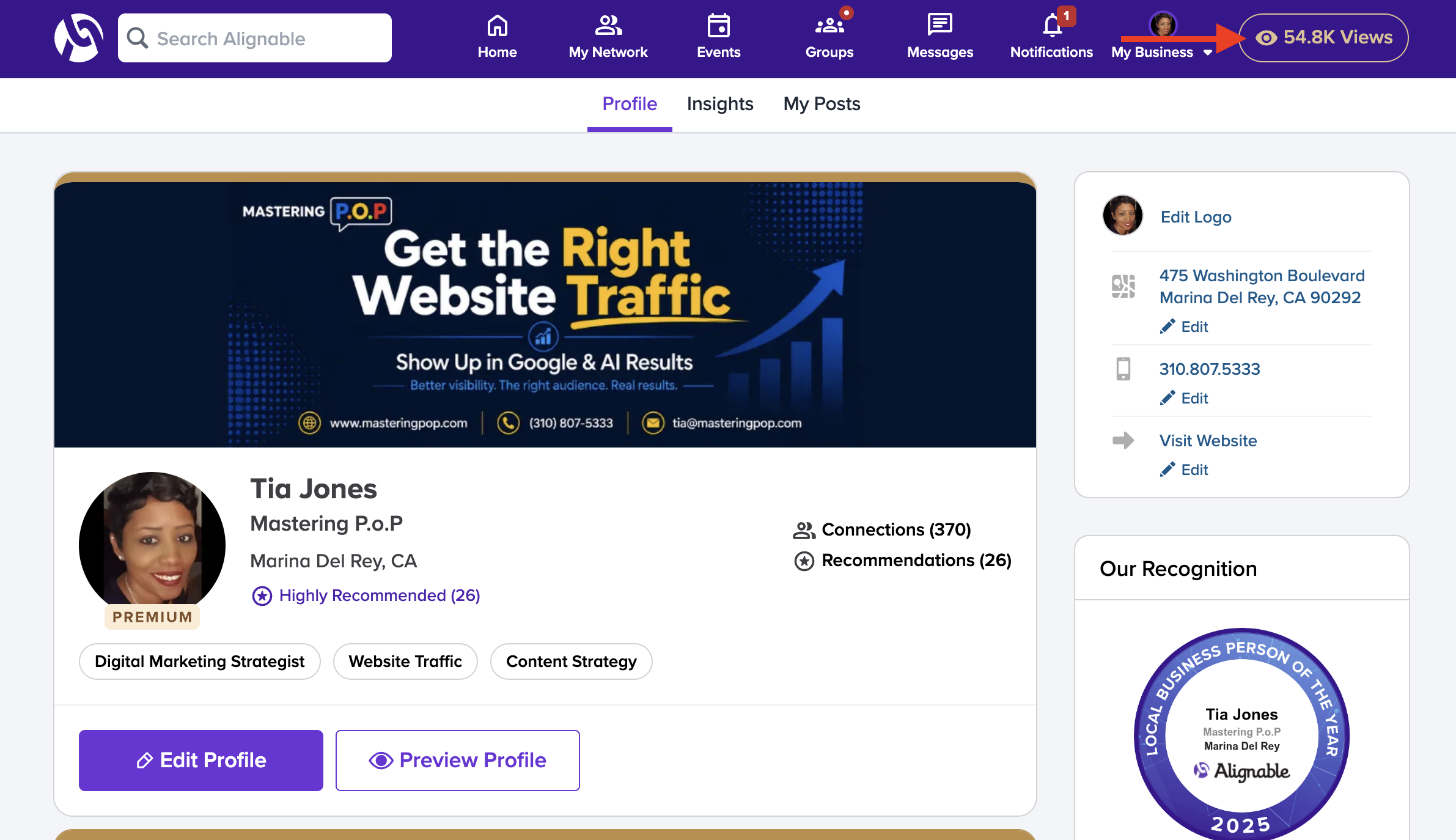
I've also generated referrals, developed relationships with other business owners, participated in Smart Connect networking events, contributed to other communities and built my own Digital Marketing & SEO group.
That's the difference between simply getting exposure and strategically putting yourself in places where business relationships can develop.
Alignable already had the audience. I didn't need to recreate it. I needed to figure out how to participate in it.
Then I Watched the Same Thing Happen in a Room Full of Women
Recently, one of my neighbors invited me to a women's business networking event. At one point during the event, everyone had an opportunity to stand up and briefly introduce themselves.
So I did. I said who I was, explained what I do through Mastering P.O.P, and sat back down.
- I didn't give a presentation.
- I didn't have a booth.
- I didn't run an ad.
- I didn't walk around trying to sell digital marketing services.
Afterward, almost two dozen of women connected with me online. Think about what actually happened there. The organization had already done the hard part. They built the community. They brought the women together. They created an environment where people were interested in meeting and supporting one another. I simply entered the right room and introduced myself.
That's borrowed audience marketing happening offline.
This Is Also Where Blue Ocean Strategy Comes In
There's another business concept that fits into this conversation: Blue Ocean Strategy.
Blue Ocean Strategy was developed by W. Chan Kim and Renée Mauborgne. At a high level, the idea is that businesses don't always have to fight competitors for the same existing demand.
- A "red ocean" is crowded. Businesses are competing for the same customers, often using similar products, messages, marketing channels and tactics.
- A "blue ocean" looks for opportunities to create new demand and operate in spaces where competition is less relevant.
I think business owners can apply some of that thinking to marketing too. Look at where everyone in your industry is fighting for attention.
If every competitor is pouring energy into Instagram, Google Ads and the same search terms, that doesn't mean you shouldn't use those channels.
But ask another question: Where else are my customers already gathering that my competitors aren't paying attention to?
That question can uncover some very interesting opportunities.
What Blue Ocean Strategy Can Look Like in the Real World
Blue Ocean Strategy doesn't necessarily mean inventing something the world has never seen before. Sometimes it's about taking something that already exists, changing how it's delivered, combining things that were previously separate or making it useful to an audience that wasn't being served particularly well.
Think about Apple and music.
Apple didn't invent music, MP3s or even the first portable digital music player. But with the iPod and iTunes ecosystem, Apple changed how millions of people purchased, organized and carried their music. Instead of simply competing with existing music retailers or electronics manufacturers in the same way, Apple created a different experience around digital music.
Canva is another example. Graphic design software already existed. Adobe was already well established. Canva didn't need to create another professional design program aimed primarily at professional designers.
Instead, Canva made design accessible to people who weren't designers. Small business owners. Social media managers. Teachers. Students. Realtors. Nonprofits. Entrepreneurs.
The opportunity wasn't simply, "How do we compete with existing design software?" It was closer to, "What about all the people who need to create something but don't know how to use professional design software?"
That's the type of thinking I want business owners to apply to their own marketing.
You don't necessarily need to invent a new product or abandon the marketing channels that already work. Sometimes you need to look at your business differently.
- Who else could use what you already sell?
- Who already serves those people?
- Where are those people gathering?
- Could you package your service differently for a particular group?
- Could you partner with another business instead of competing for customers one at a time?
That's where Blue Ocean thinking and borrowed audience marketing can start working together.
Your Blue Ocean Might Be Someone Else's Community
Suppose you're an estate planning attorney. You could compete with hundreds of attorneys for searches such as "estate planning attorney near me." You should absolutely have an SEO strategy for that. But financial advisors already have relationships with people who need estate planning. That's another route to the same customer.
A men's stylist could spend thousands advertising directly to single men. Or she could develop relationships with matchmakers and dating professionals who already work with those men.
A wellness business could continuously advertise individual services to consumers. Or it could develop relationships with local employers, hotels, apartment communities and organizations that already have access to hundreds of potential customers.
A B2B software company could spend months cold emailing individual companies. Or it could develop relationships with consultants, implementation partners and industry educators who already advise those companies.
Same potential customer. Different path to reaching them. That's where this gets much more interesting than simply asking, "How do I get more traffic?"
More examples...
A photographer may spend all of her time competing with other photographers for individual headshot clients. But acting schools, talent agencies, casting professionals and theater programs already have relationships with actors who regularly need headshots.
A web designer could compete for "website designer" searches and send hundreds of cold emails. Or she could build relationships with business coaches, marketing consultants, chambers of commerce and professional communities whose members regularly need websites.
A bookkeeper could market to every small business owner in town. Or she could become the bookkeeping resource for a community of independent realtors, therapists, photographers or another specific profession.
The better question can sometimes be: Who already has the attention of the people I'm trying to reach?
Borrowed Audiences Don't Replace SEO, Content Email Marketing, or Your Own Audience
I wouldn't stop building your own audience.
- You still want people finding you through Google.
- You still want your email list.
- You still want people visiting your website.
- You still want useful content working for you long after you publish it.
- You still want social channels where people can learn more about you.
The difference is that you don't have to wait until you've built a massive audience before your business can get meaningful exposure.
Your owned audience and borrowed audiences can actually feed each other.
Someone hears you speak at an event.
- They visit your website.
- They read an article.
- They join your email list.
- They follow you on LinkedIn.
Three months later, they need the service you provide. The borrowed audience introduced you. Your own marketing gave them ways to continue the relationship.
Stop Looking Only at Audience Size
A smaller, highly relevant audience can be far more valuable than a huge audience filled with people who have no reason to buy from you or refer you.
I'd rather put the right business in front of 100 people who are potential customers and referral partners than 10,000 random people who will scroll past and forget about it.
So when you're thinking about how to grow your business, don't only ask:
- How can I get more followers?
- How can I get more traffic?
- How can I grow my email list?
Also ask:
- Who already has relationships with the people I want to reach?
- What communities are those people already part of?
- Who serves my customer before or after they need me?
- Where are conversations about their problems already happening?
- What can I contribute that would give me a legitimate reason to be in those rooms?
You may find that the audience you have been trying so hard to build already exists. You just need access to the right one.